This post may contain affiliate links. Please read my disclosure policy.
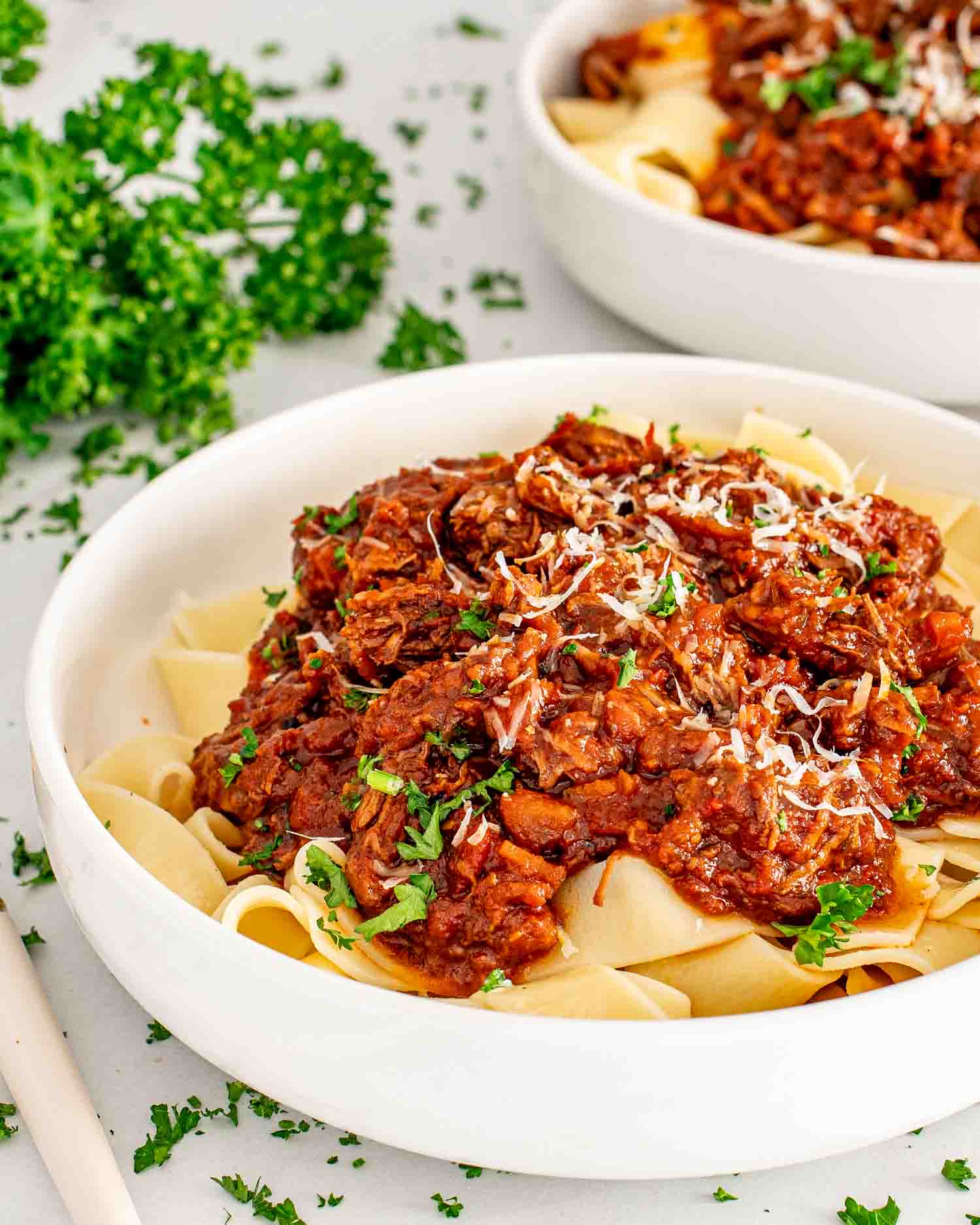
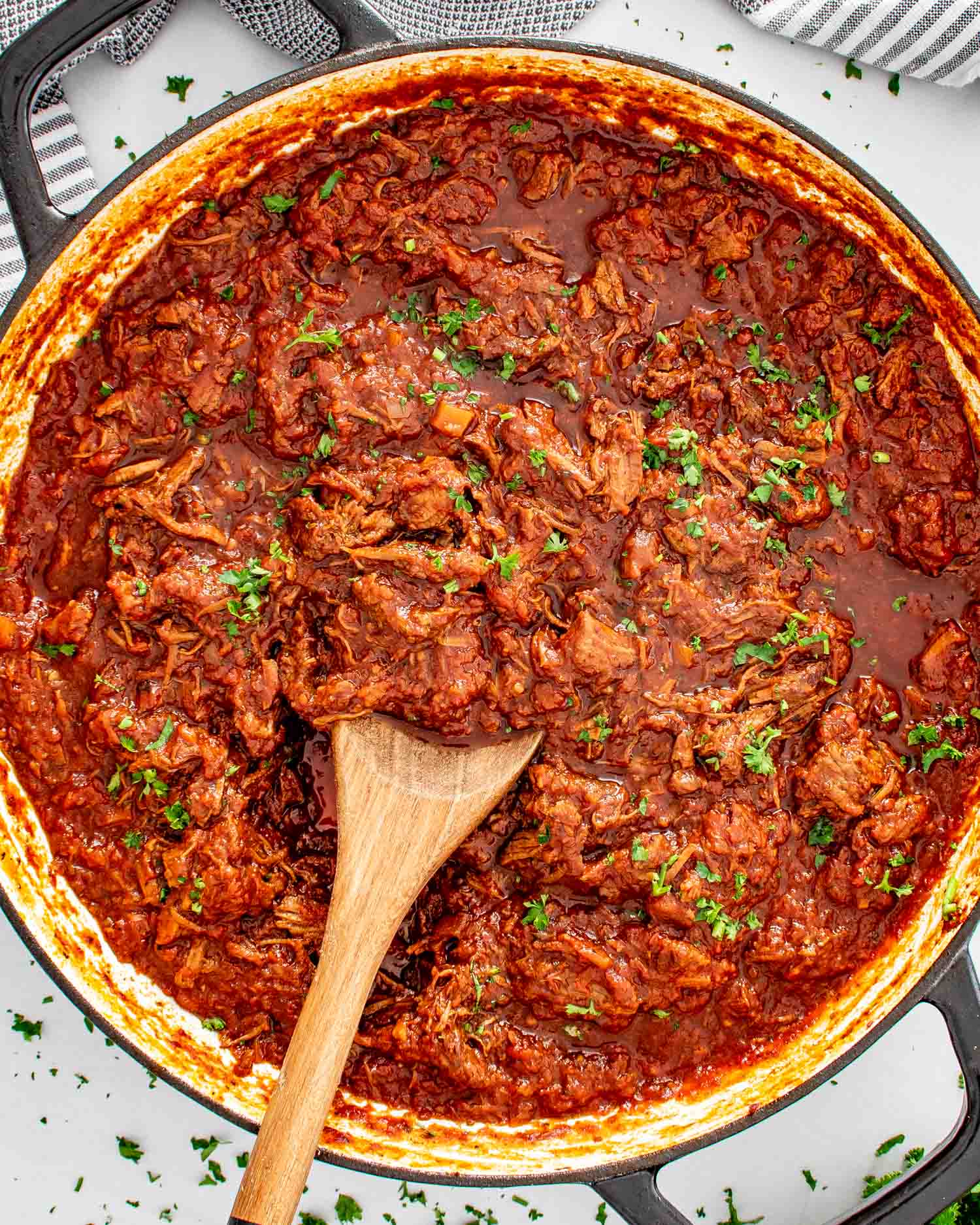
This Beef Ragu takes a cheap chuck roast and 3 hours of not paying attention to it, and gives back a sauce so rich people will assume you have Italian relatives you’ve been hiding. The beef shreds with a fork. The sauce clings to pappardelle like it was made for the job, which it was.
The Best Beef Ragu Recipe
There are two kinds of pasta sauce. There’s the kind you make on a Tuesday because everyone needs feeding, and then there’s this.
Beef ragu is a Sunday sauce. Not because it’s difficult, because it absolutely isn’t, but because it takes 3 hours and there’s no way around that. You sear the beef, soften some vegetables, put everything in a pot, and then you go away and live your life while the house slowly fills with a smell that makes people wander into the kitchen asking questions.
The beef is chuck roast, which is the cheap cut, and that’s not a compromise. Chuck is full of connective tissue that turns silky over a long cook, which is exactly what you want here. Use something expensive and you’ll get dry, stringy, expensive beef. I find that deeply satisfying and slightly funny.
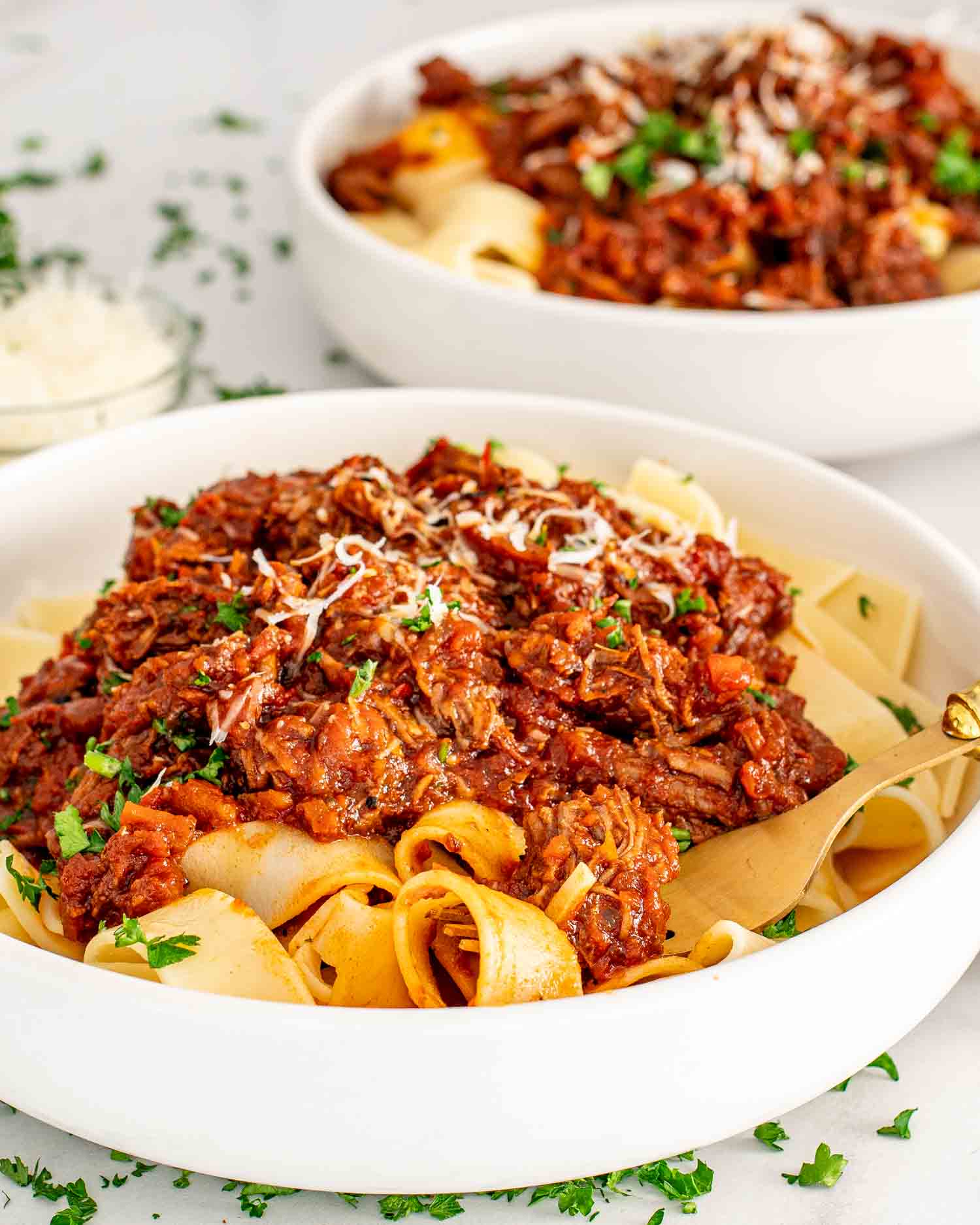
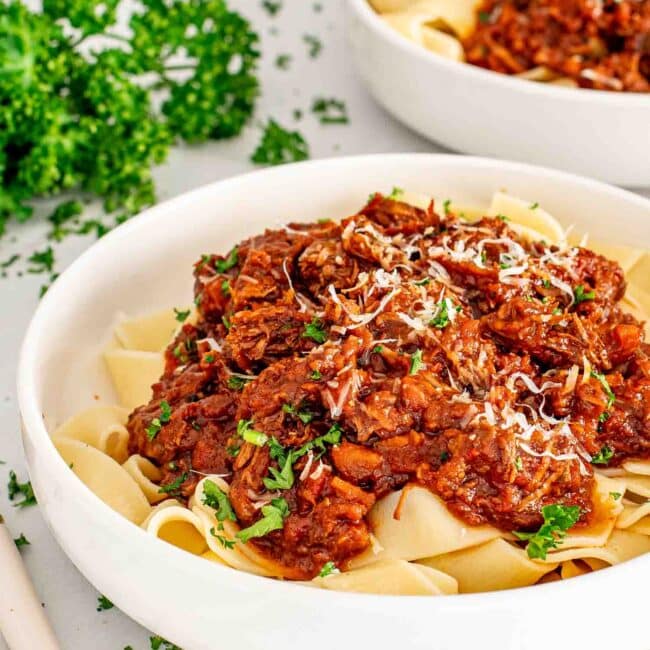
Three hours in, you fish the beef out, shred it with two forks in about 30 seconds, and put it back. Serve it over pappardelle. Those wide ribbons exist specifically to carry heavy meat sauces, and putting this on spaghetti feels like showing up to a black tie thing in cargo shorts.
Ragu Or Bolognese?
People use these interchangeably and then someone’s nonna appears in the comments, so let’s sort it out.
- Ragu is the whole family. Any Italian meat sauce slow cooked with a bit of tomato. It’s the category, not a specific recipe, and there are dozens of regional versions that all disagree with each other.
- Bolognese is one specific ragu, from Bologna, and it’s traditionally made with ground meat, milk, and only a small amount of tomato. The milk sounds strange and it’s genuinely lovely, tenderizing the meat and rounding the whole thing out.
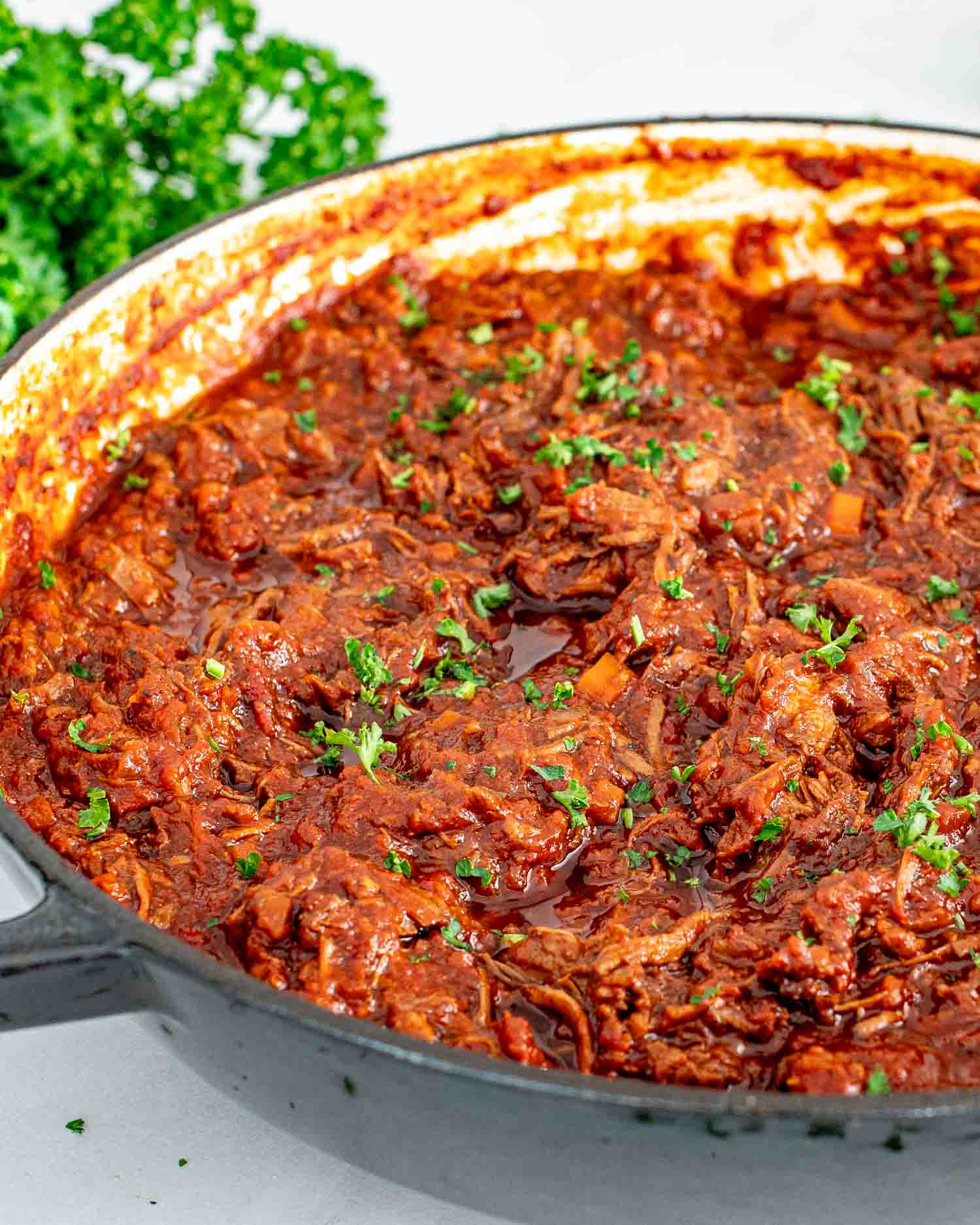
- This one uses whole pieces of chuck roast braised until they shred, with a properly tomato forward sauce. So it’s a ragu, and it’s closer to a Neapolitan style than a Bolognese one.
Practically speaking, the difference you’ll notice is texture. Ground meat sauce is uniform. This is strands and shreds of beef that catch in the pasta, which I prefer, though I accept that’s a matter of taste and I’m not going to fight anyone about it.
Why Chuck Roast Is The Right Call
Here’s the thing that makes this recipe work, and it’s slightly counterintuitive if you’re used to cooking steak.
Chuck comes from the shoulder, which is a hardworking muscle full of collagen. Over 3 hours at a low simmer that collagen melts into gelatin, and gelatin is what gives you both the fall apart texture and the body in the sauce. It’s why this tastes richer than the ingredients suggest it should.
A lean, expensive cut has almost none of that. Braise a ribeye for 3 hours and you’ll get dry shreds and a thin sauce, plus you’ll have spent a lot of money to make something worse. Slow cooking is one of the few areas of life where the budget option is genuinely the better one.
Brisket also works well and behaves similarly. Round roast is leaner and less forgiving, so watch it.
Cut it into 6 large pieces, not small ones. Big chunks stay juicy through the long cook and shred beautifully. Small pieces just dry out and go stringy, having given all their moisture to the pot.
Ingredients in Beef Ragu
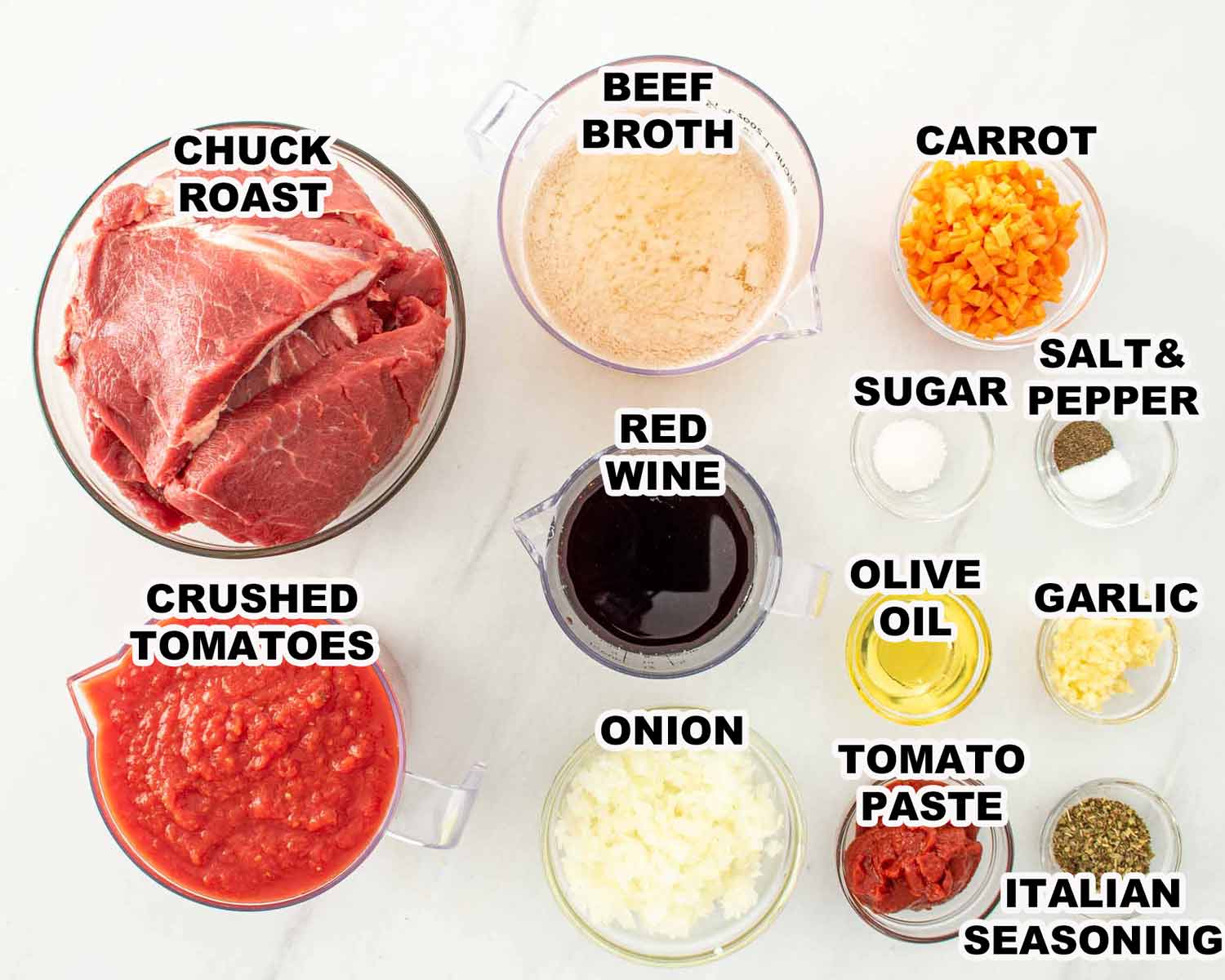
- Beef chuck roast (3 pounds, cut into 6 equal pieces): The marbling and connective tissue are the whole reason this works. Brisket is a good alternative. Cut it into 6 large pieces rather than dice, because big chunks hold their moisture and shred properly at the end.
- Salt (1 teaspoon) and pepper (1 teaspoon): Season the beef before it hits the pan, not after. A full teaspoon of pepper across 3 pounds is right.
- Olive oil (2 tablespoons, divided): One tablespoon for searing the beef, one for the vegetables. Canola or vegetable oil work fine.
- Onion (1 medium, chopped): Cooks down into the base of everything. Nothing fancy required.
- Garlic (6 cloves, minced): Six sounds like a lot and it isn’t. Over 3 hours garlic mellows into something soft and sweet and completely unrecognizable from the raw stuff.
- Carrot (1 medium, finely chopped or shredded): This is quietly doing more than you’d think. Carrot brings a natural sweetness that balances the acidity of all those tomatoes, which is why the sugar amount is so small. Shredding it means it dissolves entirely into the sauce.
- Crushed tomatoes (28 ounces): The backbone. Buy a brand you’d happily eat straight from the tin, because there’s nowhere for a bad tomato to hide in a sauce this simple. San Marzano if you’re feeling fancy.
- Italian seasoning (1 tablespoon): A tablespoon might look aggressive. It isn’t, because it’s seasoning 3 pounds of beef and a large pot of sauce over 3 hours. Homemade Italian seasoning works beautifully.
- Tomato paste (3 tablespoons): Concentrated tomato flavor and it thickens the sauce as it cooks. This is where a lot of the depth comes from, so don’t skip it.
- Red wine (1 cup): Something dry you’d actually drink. Chianti, Merlot, and Cabernet Sauvignon all work. It deglazes the pot and adds an acidity the sauce genuinely needs. Beef broth is the substitute, and you’ll want a splash of red wine vinegar to make up the missing sharpness.
- Beef broth (2 cups): The braising liquid. Low sodium if you can, since this reduces for 3 hours and salt concentrates as it goes.
- Sugar (1 teaspoon): Just enough to take the edge off the tomatoes. Taste at the end and add another teaspoon if it’s still sharp, which depends entirely on your tomatoes.
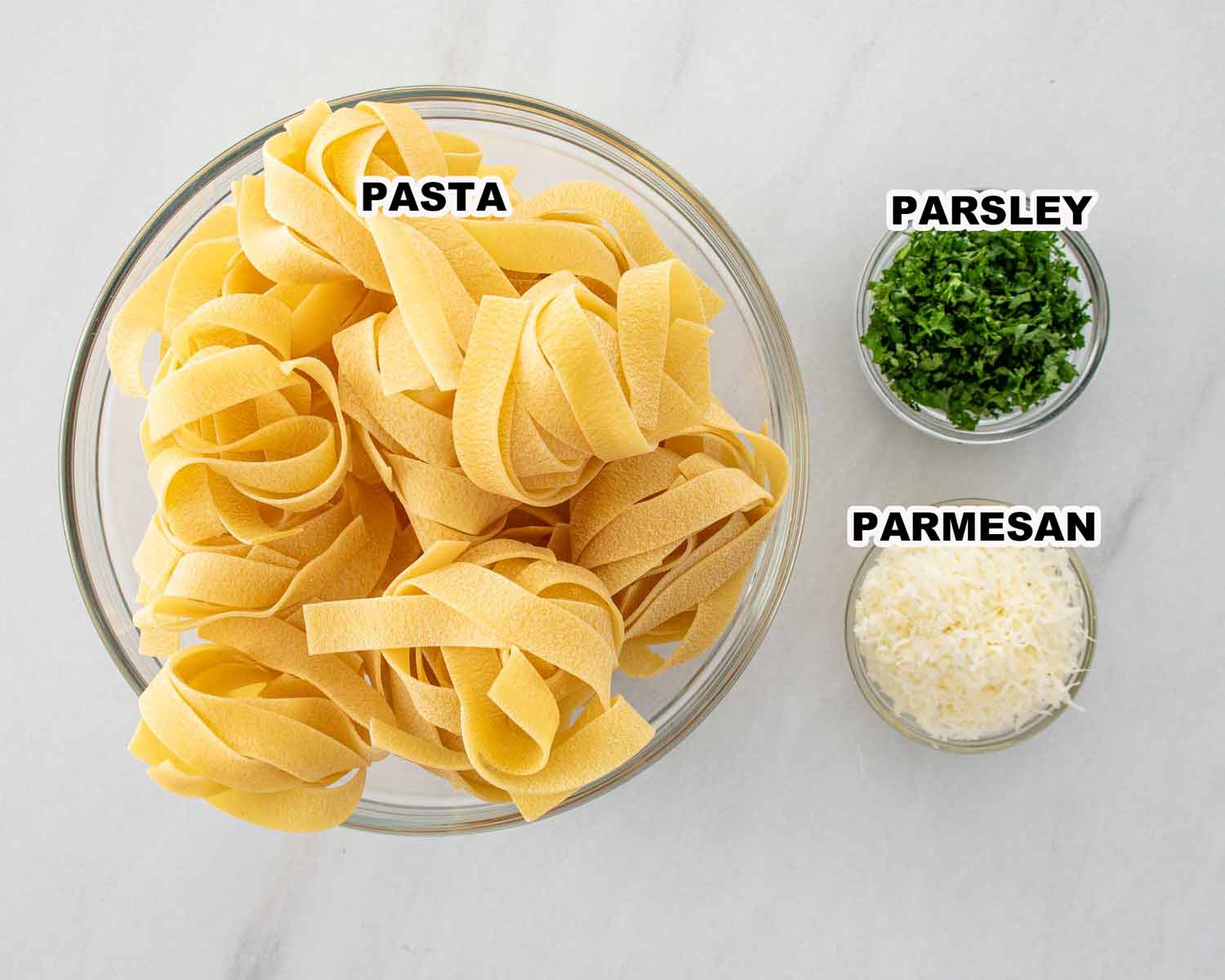
- Pappardelle (1 pound): Wide flat ribbons built for exactly this. Tagliatelle and fettuccine both work. Spaghetti technically functions and the sauce will slide right off it, so I’d rather you didn’t.
- Parmesan and fresh parsley (to serve): Grate the Parmesan yourself. The parsley is for freshness against all that richness, and it matters more than it looks like it should.
How To Make Beef Ragu
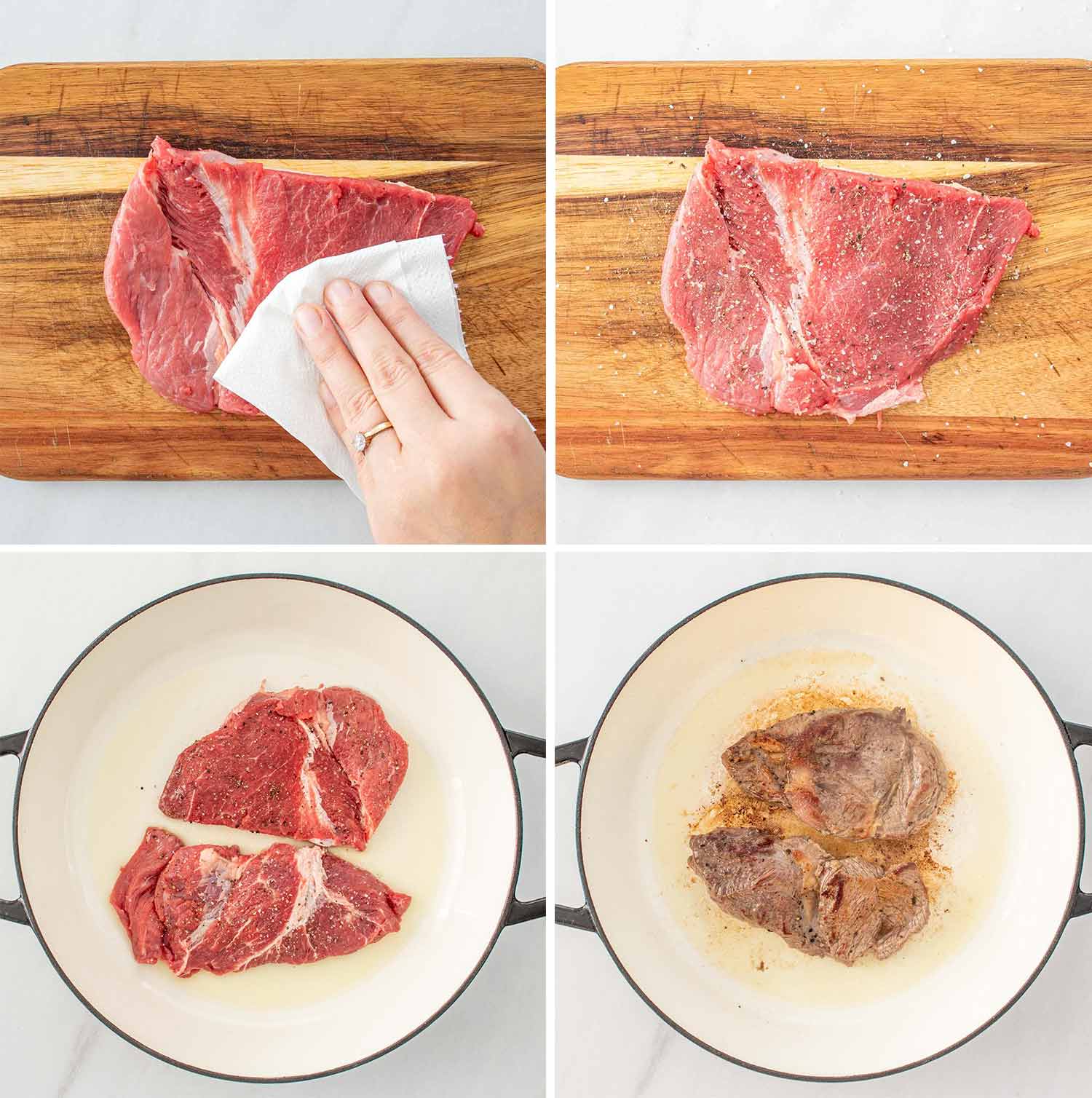
Dry the beef and season it. Pat the pieces properly dry with paper towels first, because wet beef steams instead of browning and you’ll stand at the stove wondering why nothing’s happening. Then salt and pepper all over.
Sear it hard. One tablespoon of oil into a Dutch oven over high heat, and brown the beef on every side. Work in batches if the pot is crowded, and it probably is. This is the single most important 10 minutes here, because everything brown that sticks to the bottom of that pot becomes the flavor of your sauce. Transfer the beef to a plate.
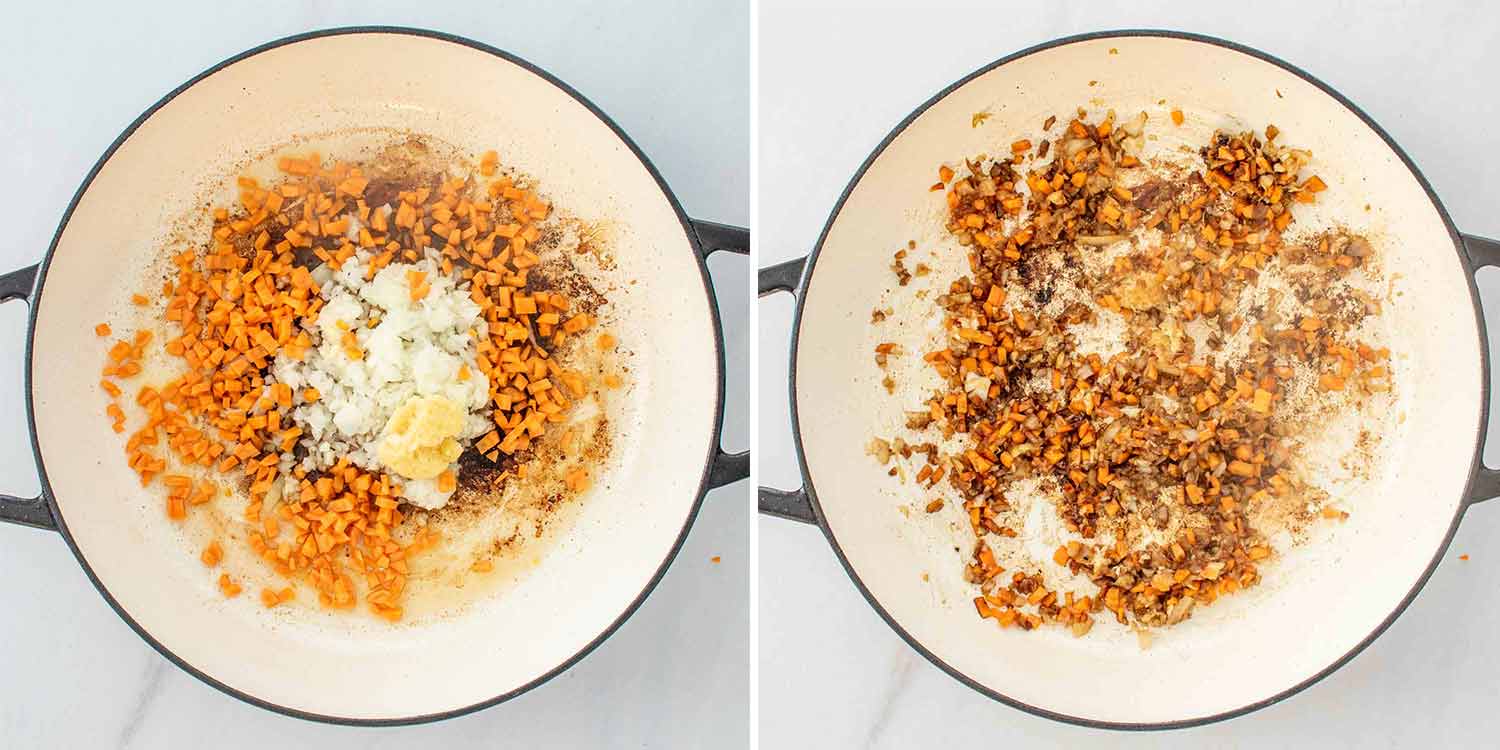
Soften the vegetables. Heat down to medium, second tablespoon of oil in, then onion, garlic, and carrot. Give it at least 5 minutes until the onion is soft and translucent and the kitchen smells like the beginning of something.
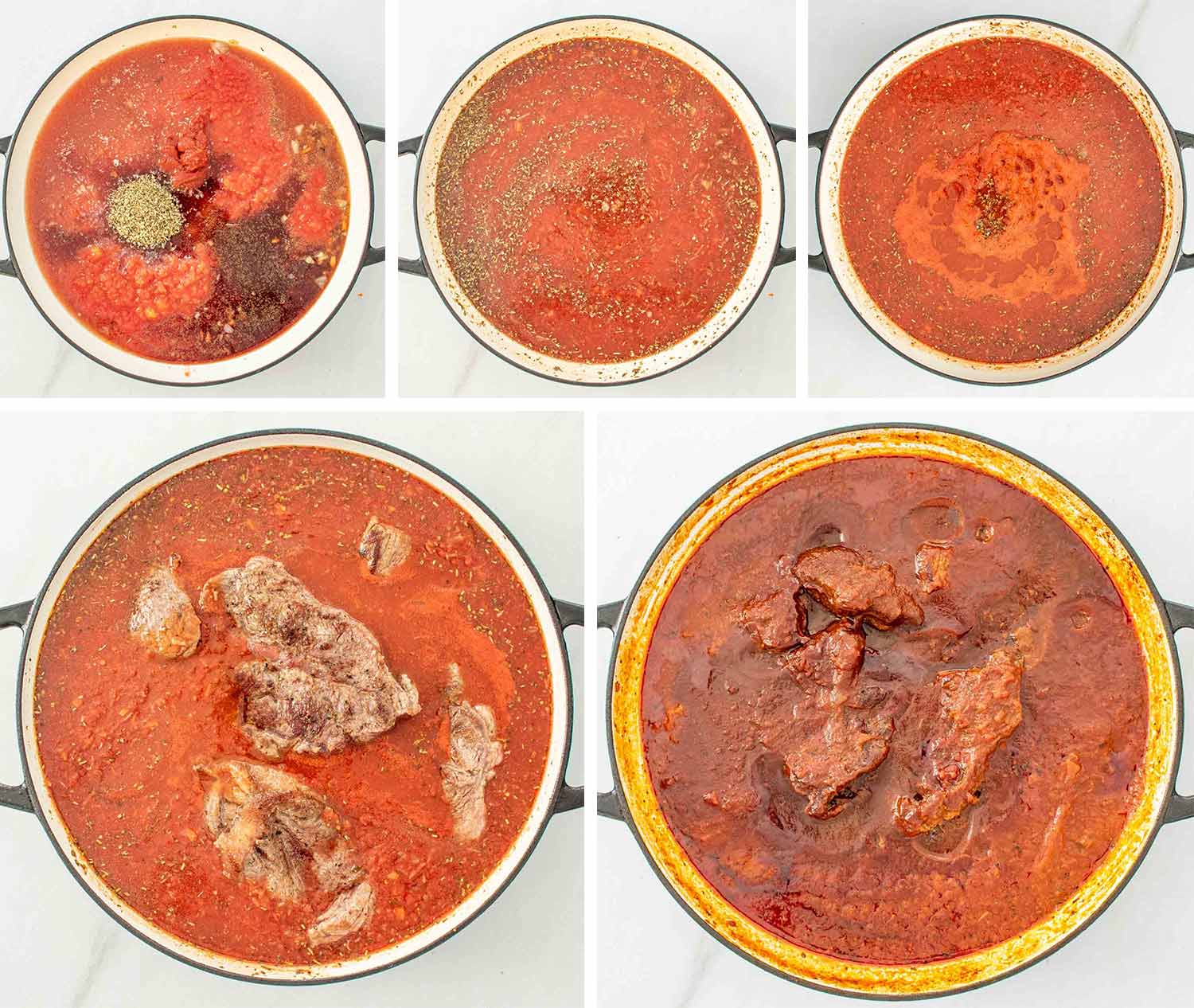
Everything else in. Crushed tomatoes, Italian seasoning, tomato paste, red wine, beef broth, and sugar. Stir it well and scrape the bottom of the pot as you go, because those browned bits will lift right off into the sauce. Bring it up to a simmer.
Beef back in, lid on, heat down to low. Now leave it alone for 2 hours. Genuinely leave it. Every time you lift the lid you’re letting out heat and steam that the pot has to spend 20 minutes making back.
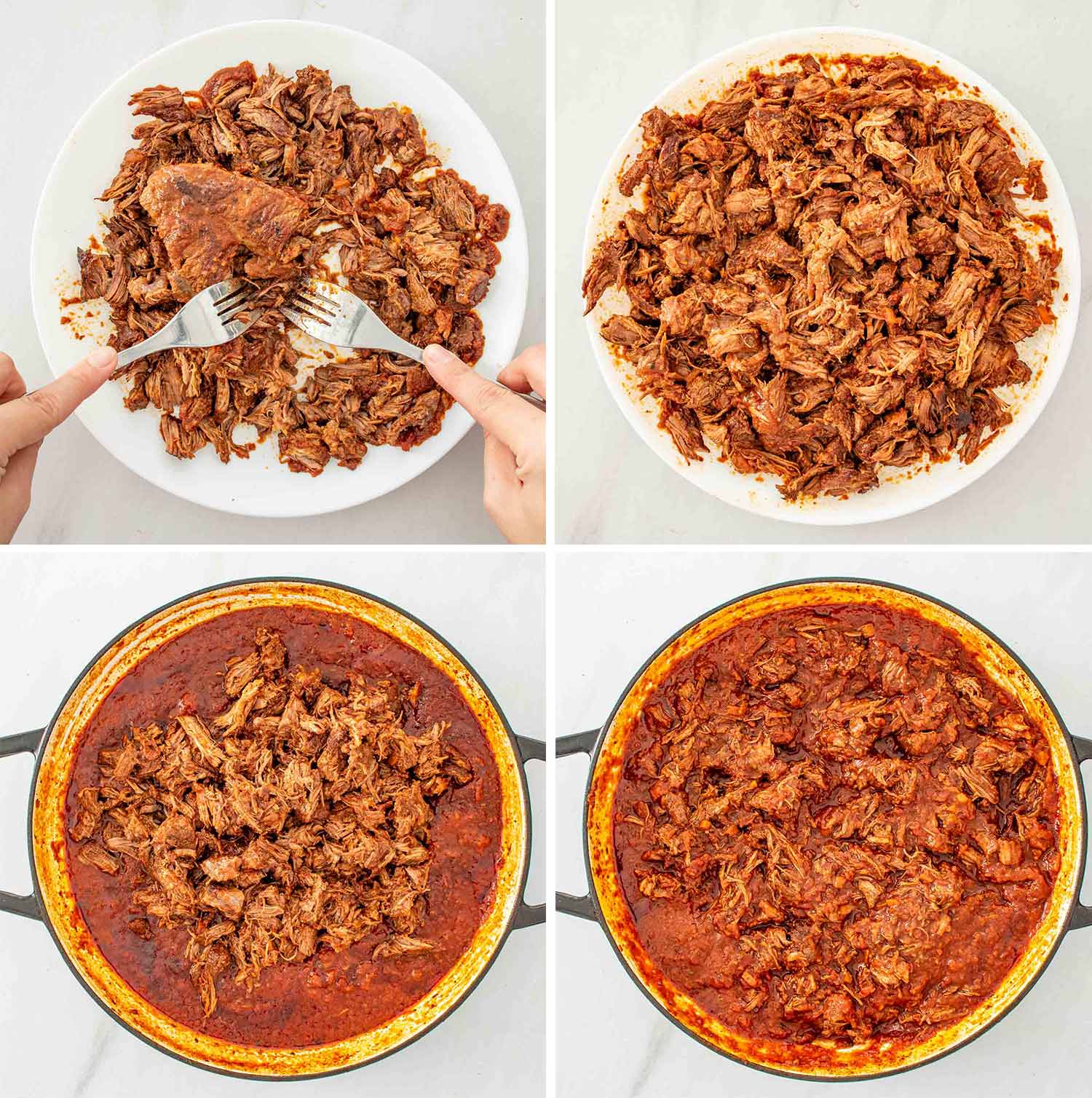
Shred it. After 2 hours the beef should give way with no resistance at all. Lift the pieces out, put them on a board, and pull them apart with 2 forks. It takes about 30 seconds and it’s the most satisfying part of the whole thing. If it’s fighting you, it isn’t done, so put it back and give it another 30 minutes.
Back in the pot for a final 30 minutes, uncovered this time. Taste and season. Three hours of reduction changes things, and it may want more salt, or another teaspoon of sugar if your tomatoes were sharp.
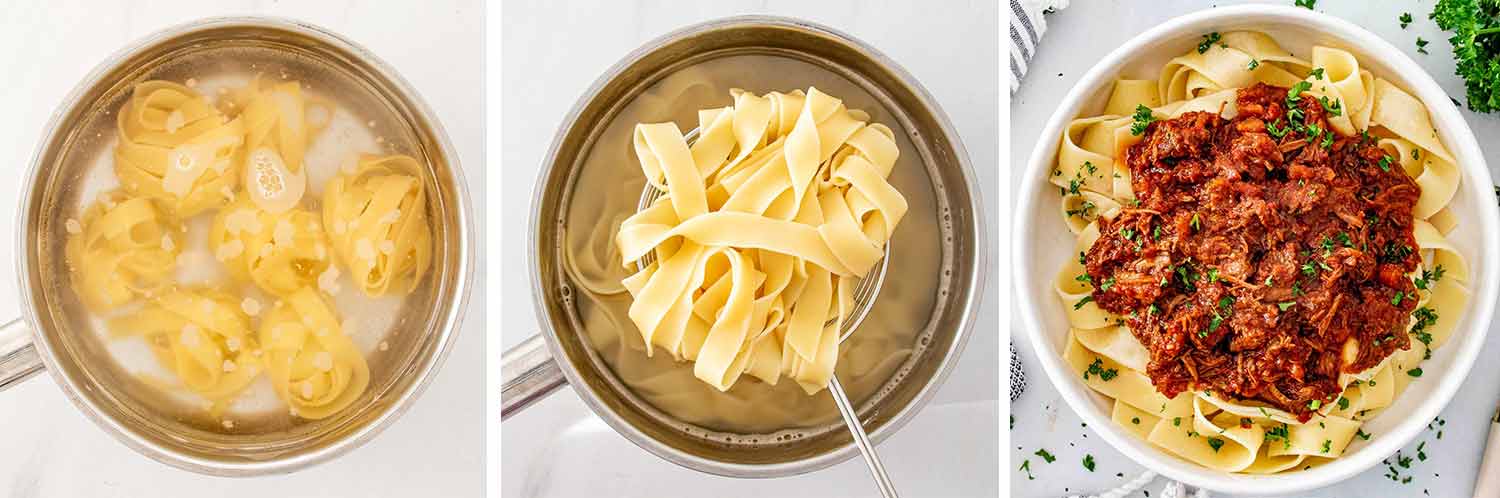
Cook the pasta near the end so it’s ready when the sauce is. Serve the ragu over the pappardelle, then Parmesan and parsley over the top.
Things Worth Knowing
- Dry the beef before searing. Ten seconds with a paper towel is the difference between a crust and a gray disappointment.
- Sear in batches. A crowded pot drops the temperature and the beef steams. Two batches, 4 extra minutes, much better sauce.
- Scrape the bottom. All that stuck on brown is flavor. The wine and tomatoes will lift it if you help them.
- Big pieces, not small ones. Six chunks from a 3 pound roast. Small pieces dry out.
- Leave the lid on. Peeking costs you heat and time and gains you nothing.
- If the beef won’t shred, it isn’t done. Chuck goes tight before it goes tender. Give it longer.
- Taste at the end. After 3 hours of reducing, the seasoning will have shifted. It usually wants a bit more salt and sometimes more sugar.
- It’s better tomorrow. Genuinely. If you can make it a day ahead, do.
Variations
Slow cooker. Sear the beef and soften the vegetables on the stove first, because a slow cooker can’t brown anything and skipping it costs you most of the flavor. Then everything into the crock on low for 6 to 8 hours. Shred, and let it go another 30 minutes.
With celery. Add a chopped stalk with the onion and carrot for a proper soffritto base.
Milkier, closer to Bolognese. Stir in ½ cup of whole milk in the last 30 minutes. It sounds odd and it makes the sauce rounder and silkier.
Spicy. A teaspoon of red pepper flakes with the tomatoes. Ragu takes chili very well.
Mushrooms. A pound of sliced cremini added with the onions makes it earthier and more substantial.
Serve it differently. Excellent over creamy polenta, spooned onto crostini, or piled into a baked potato. It’s also a very good lasagna filling.
What To Serve With It
Bread. Crusty, absorbent, non negotiable. There will be sauce left in the bottom of the bowl and it deserves a proper send off.
Past that, this is a heavy plate and it wants something sharp beside it. A green salad with an aggressively acidic vinaigrette does more work than you’d expect. Garlic bread is the indulgent version and nobody will complain.
Red wine. Ideally the same one you cooked with, which is a good excuse to buy something you’d actually enjoy drinking.
Make Ahead And Storage
Make ahead: this is genuinely better on day 2, so cooking it a day early is an upgrade rather than a compromise. The flavors settle and the sauce thickens. Make it Saturday, eat it Sunday, look like you planned it.
Fridge: 3 to 4 days in an airtight container. Store the sauce and pasta separately, because pasta sitting in sauce overnight goes soft and swollen.
Freezer: 3 months, and it freezes brilliantly. Portion it before freezing rather than one enormous block, unless you enjoy chiselling.
Reheating: low on the stove with a splash of broth or water to loosen it. It’ll have thickened considerably in the fridge, which is a good sign rather than a problem.
Craving More Comforting Pasta?
- Greek Chicken Pasta
- One Pot Creamy Parmesan Pasta
- Cheeseburger Hamburger Helper
- Cheesy Taco Pasta
- Easy Pasta Alfredo
- Pasta Puttanesca
- Pasta Alla Norma
- Spaghetti and Meatballs
- Aglio e Olio
- Classic Spaghetti and Meatballs
Beef Ragu
Equipment
Ingredients
- 3 pound beef chuck roast cut into 6 equal pieces
- 1 teaspoon salt
- 1 teaspoon pepper
- 2 tablespoon olive oil divided
- 1 medium onion chopped
- 6 cloves garlic minced
- 1 medium carrot finely chopped or shredded
- 28 ounce crushed tomatoes
- 1 tablespoon Italian seasoning
- 3 tablespoon tomato paste
- 1 cup red wine
- 2 cups beef broth low sodium
- 1 teaspoon sugar
To Serve
- 1 pound pappardelle pasta
- Parmesan cheese freshly grated
- fresh parsley chopped
Instructions
- Pat the 3 pounds beef chuck roast pieces dry with paper towels, then season with the 1 teaspoon salt and 1 teaspoon pepper.
- Heat the 1 tbsp of olive oil in a Dutch oven or heavy based pot. Add the beef to the pot and sear it on all sides until browned, over high heat. Transfer the beef to a plate.
- Reduce the heat to medium and add the remaining 1 tablespoon olive oil. Add the 1 chopped onion, 6 cloves minced garlic, and 1 chopped carrot. Sauté for at least 5 minutes, until the onion softens.
- Add the 28 ounces crushed tomatoes, 1 tablespoon Italian seasoning, 3 tablespoons tomato paste, 1 cup red wine, 2 cups beef broth, and 1 teaspoon sugar. Stir to combine, scraping the browned bits from the bottom of the pot. Bring to a simmer.
- Return the beef to the pot, reduce the heat to low, and cover. Cook for 2 hours, until the beef is tender enough to shred. Keep the lid on.
- Remove the beef and shred it with 2 forks. If it resists, return it to the pot and give it another 30 minutes.
- Return the shredded beef to the pot and stir. Taste and adjust the salt, pepper, and sugar as needed. Simmer uncovered for another 30 minutes, until the sauce has reduced and thickened.
- Cook the 1 pound pappardelle according to package directions. Serve the ragu over the pasta with freshly grated Parmesan and chopped parsley.
Tips & Notes:
- Dry the beef before searing. Wet beef steams instead of browning.
- Sear in batches. A crowded pot drops the temperature and you lose the crust that flavors the whole sauce.
- Big pieces, not small. Six chunks from a 3 pound roast. Small pieces dry out over a long braise.
- Scrape the pot when the liquid goes in. Those browned bits are the best flavor in the dish.
- Keep the lid on. Every peek lets out heat the pot has to make back.
- If it won’t shred, it needs longer. Chuck goes tight before it turns tender.
- Taste at the end. After 3 hours of reducing it may want more salt, or more sugar if your tomatoes were sharp.
- Better on day 2. Make it ahead if you can, and store the sauce separately from the pasta.
nutrition facts
Frequently Asked Questions
Can I make beef ragu in a slow cooker?
Yes, and it works well. Sear the beef and soften the vegetables on the stove first though, because a slow cooker can’t brown anything and that browning is where most of the flavor comes from. Then low for 6 to 8 hours, shred, and give it another 30 minutes.
What’s the difference between ragu and bolognese?
Ragu is the whole category of Italian slow cooked meat sauces. Bolognese is one specific version from Bologna, made with ground meat, milk, and less tomato. This one uses whole pieces of beef braised until they shred, so it’s a ragu but not a bolognese.
My beef won’t shred, what did I do wrong?
Probably nothing. Chuck goes through a stage where it’s cooked but still tight, and it doesn’t turn tender until the connective tissue has fully broken down. Put the lid back on and give it another 30 minutes. It’ll get there.
Can I use a different cut of beef?
Brisket works well. Round roast is leaner and less forgiving. What I’d avoid is anything lean and expensive, because 3 hours will turn it dry and stringy and you’ll have paid handsomely for the privilege.
What if I don’t want to use wine?
Swap it for an equal amount of beef broth and add a tablespoon of red wine vinegar. The wine is bringing acidity as much as flavor, and without something sharp the sauce goes flat.
Can I freeze it?
Absolutely, up to 3 months, and it comes back beautifully. Freeze it in portions rather than one big block and thaw overnight in the fridge.