This post may contain affiliate links. Please read my disclosure policy.
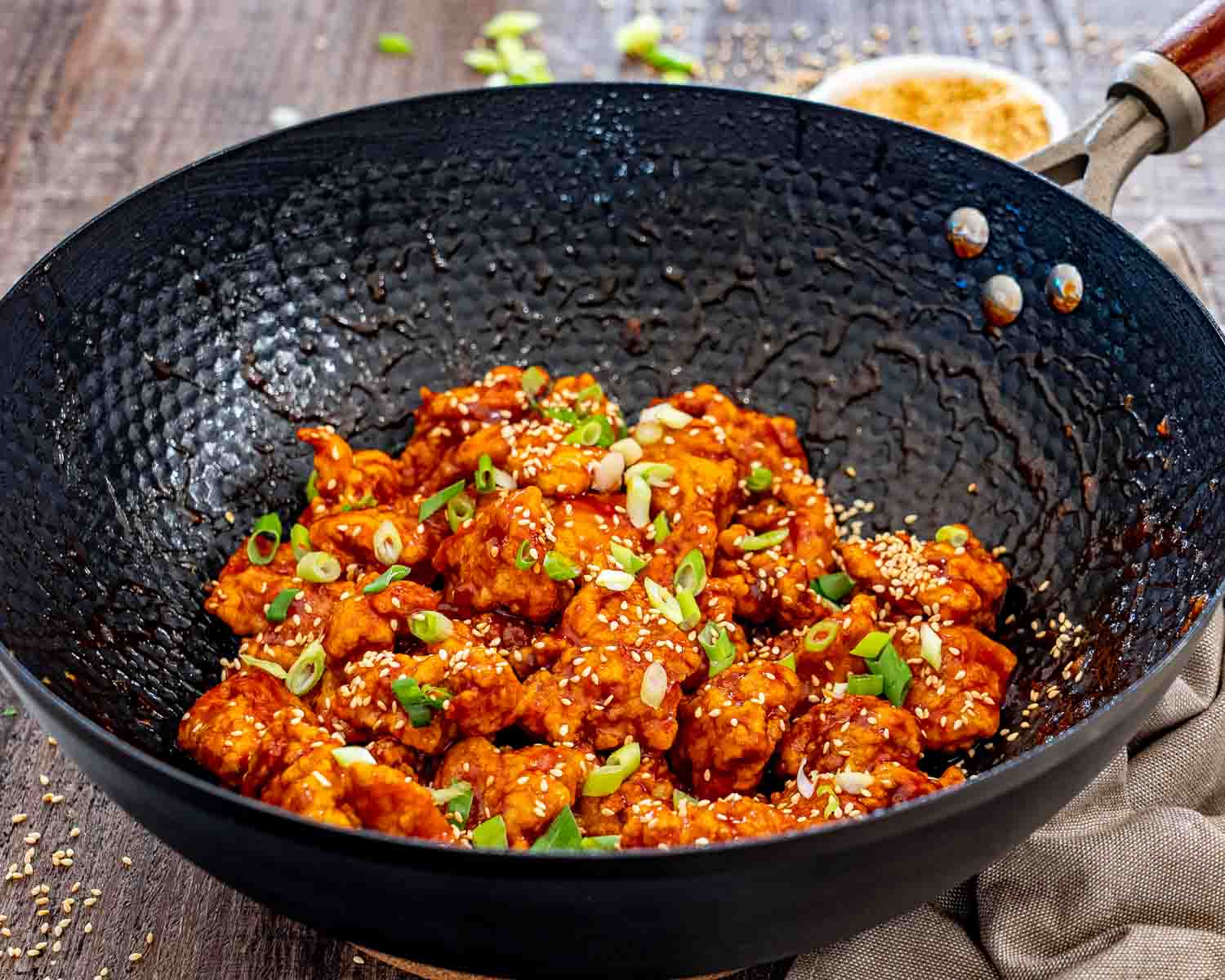
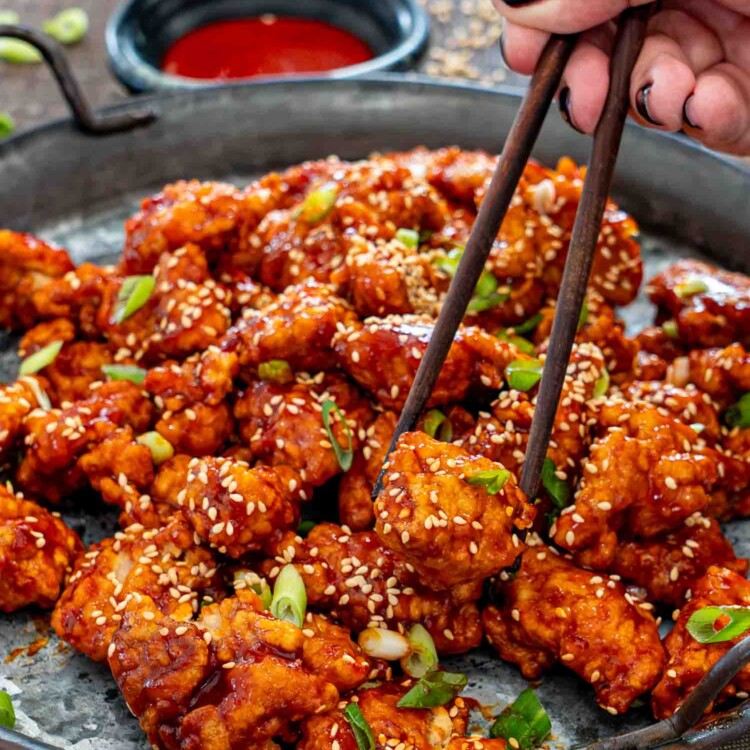
This Korean Popcorn Chicken has bite size chicken thighs with a shatteringly crispy cornstarch coating, fried twice for maximum crunch, and tossed in a sticky gochujang honey sauce that’s sweet, savory, and just spicy enough to keep you reaching for more. It’s the kind of appetizer that disappears before anyone sits down and you’ll be okay with that.
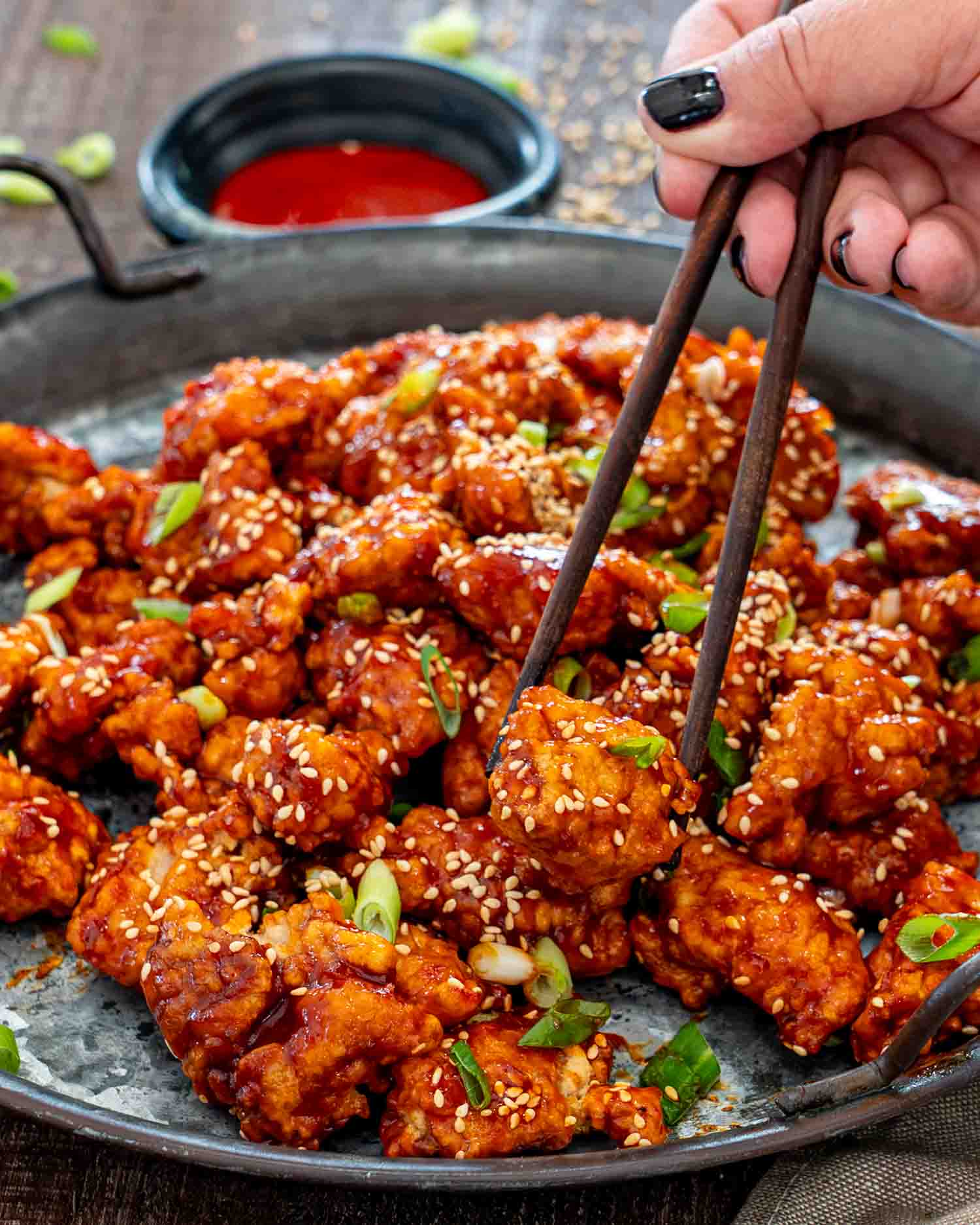
Korean Popcorn Chicken
If you’ve ever had Korean fried chicken and immediately started plotting how to make it at home, this is your recipe.
Korean fried chicken is different from regular fried chicken in a few very specific ways. The coating uses cornstarch which gives you a crunch that shatters when you bite into it rather than just crumbling. The chicken gets fried twice, which sounds excessive until you taste it and realize it’s the best decision anyone has ever made. And then the whole thing gets tossed in a sauce that’s sweet and spicy and sticky and deeply savory all at once.
This popcorn version uses bite size pieces so every piece is mostly crust and sauce. Which if you think about it is the best possible ratio of crust and sauce.
About Gochujang
If gochujang is new to you, welcome to one of the best ingredients you’re about to start putting on everything.
Gochujang is a Korean fermented chili paste made from red chilies, glutinous rice, and soybeans. It’s spicy but not aggressively so. What it really is is deeply savory, slightly sweet, and fermented in a way that adds a complexity you simply can’t get from regular hot sauce or chili paste. It’s the backbone of this sauce and the reason it tastes like more than just the sum of its parts.
Find it in the Asian aisle of most grocery stores or at any Korean or Asian grocery store. Once you have a tub of it you’ll use it constantly. It’s good on eggs, good as a marinade, good stirred into mayo, good on basically everything. Consider this your official introduction.
Ingredients in Korean Popcorn Chicken
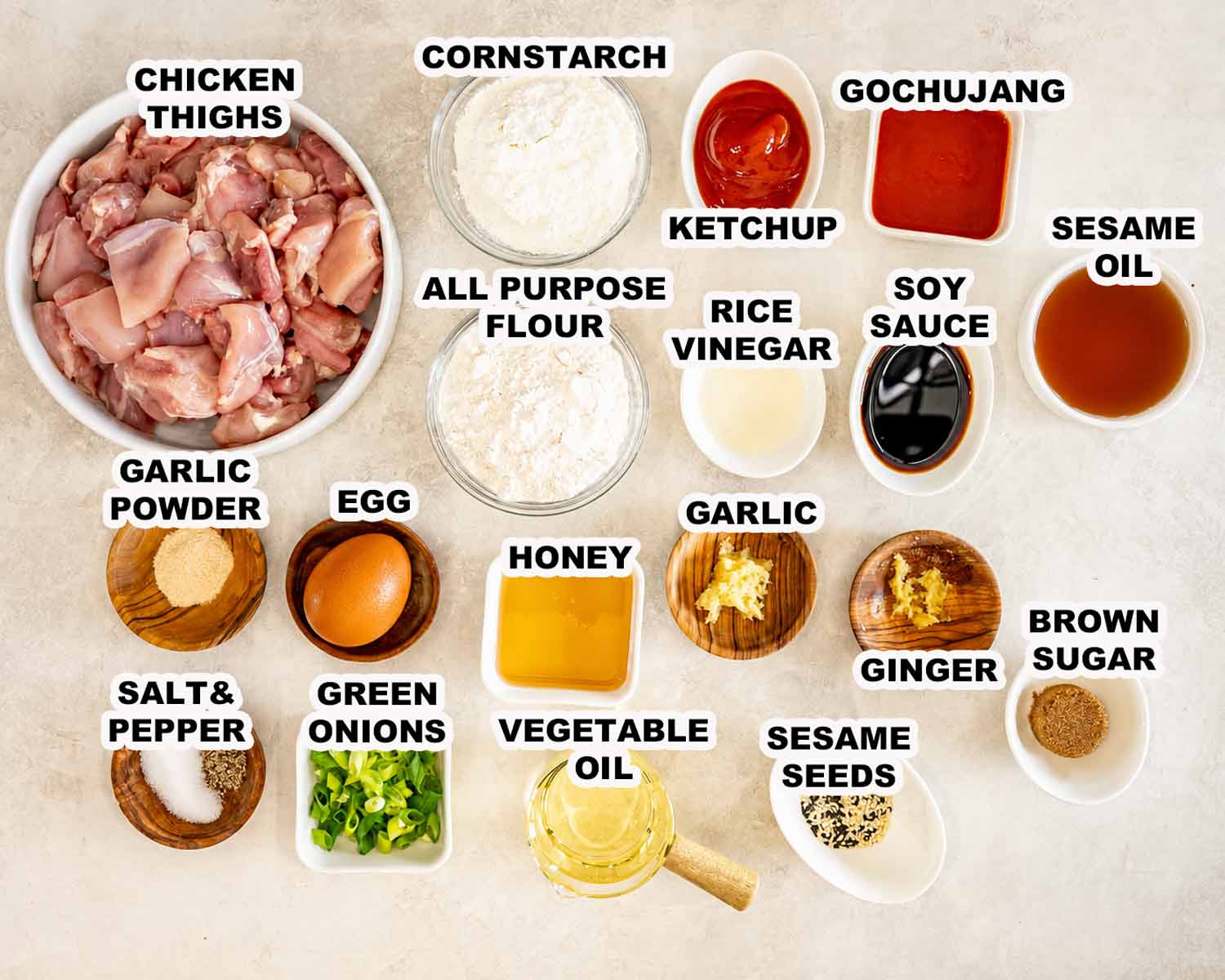
- Boneless skinless chicken thighs (1½ pounds, cut into bite size pieces): Thighs over breasts here. More flavor, juicier, and they stay moist inside the crust even through a double fry. Breasts dry out too easily at frying temperatures.
- Salt, pepper, garlic powder, and fresh ginger: The seasoning that goes directly on the chicken before coating. Fresh ginger specifically, not ground.
- Egg: Helps the coating adhere to the chicken. Don’t skip it.
- Cornstarch and all purpose flour (equal parts): The coating that gives you that distinctively crispy Korean fried chicken crust. The cornstarch is non negotiable. See above.
- Vegetable oil: For frying. Needs to be a neutral high smoke point oil. Vegetable, canola, or peanut oil all work.
- Gochujang (3 tablespoons): The heart of the sauce. See the section above.
- Honey and brown sugar: The sweetness that balances the heat and helps the sauce get glossy and sticky.
- Soy sauce (low sodium): Savory backbone of the sauce. Low sodium so you control the salt level.
- Ketchup: Sounds unexpected and works completely. Adds body, a little tang, and helps the sauce cling to the chicken.
- Rice vinegar: Brightness and acidity that keeps the sauce from being one dimensional.
- Garlic (3 cloves, minced): Goes into the sauce.
- Toasted sesame oil: Stirred into the sauce at the end for that distinctive nutty finish.
- Sesame seeds and green onions: For finishing. Don’t skip them, they’re part of the dish.
How to Make Korean Popcorn Chicken
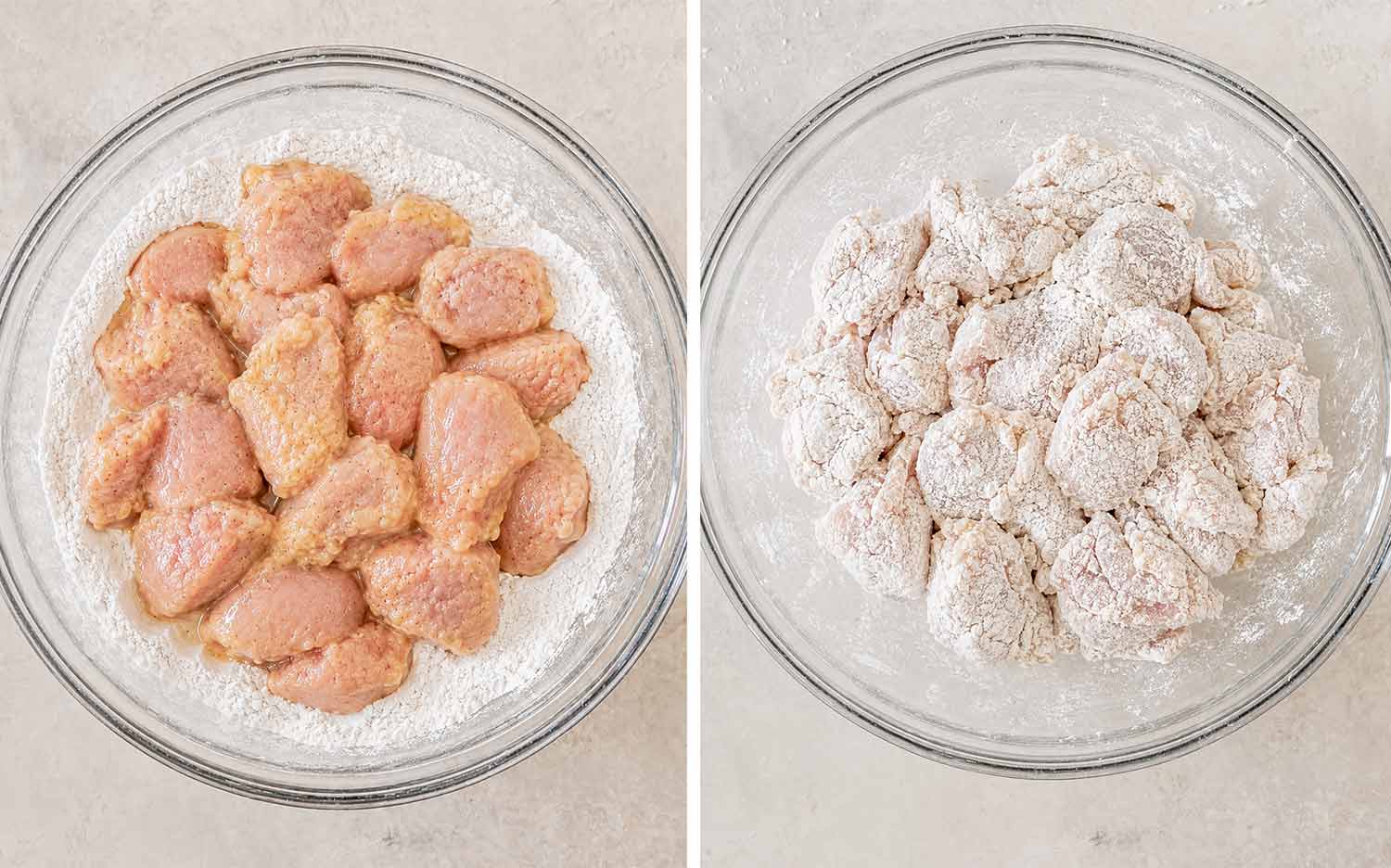
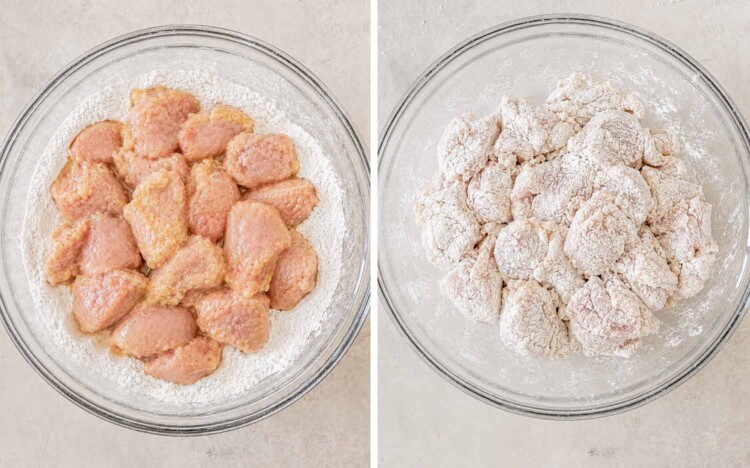
Toss the chicken pieces with the salt, pepper, garlic powder, and grated ginger until every piece is well seasoned. Add the egg and mix until every piece is coated. In a separate shallow dish whisk together the cornstarch and flour. Toss the chicken in the coating mixture and press so it sticks properly. You want every piece well covered with no bare spots.
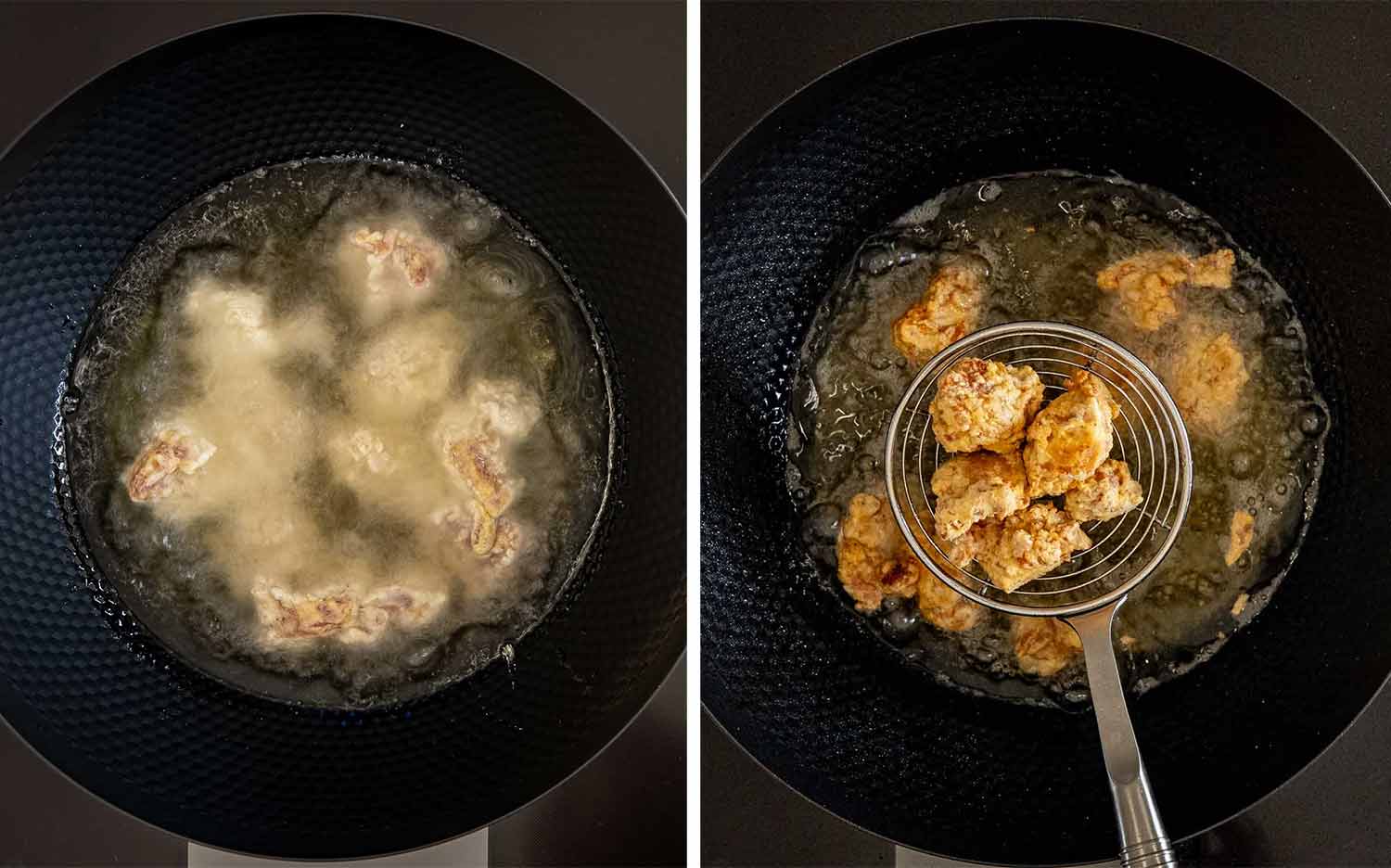
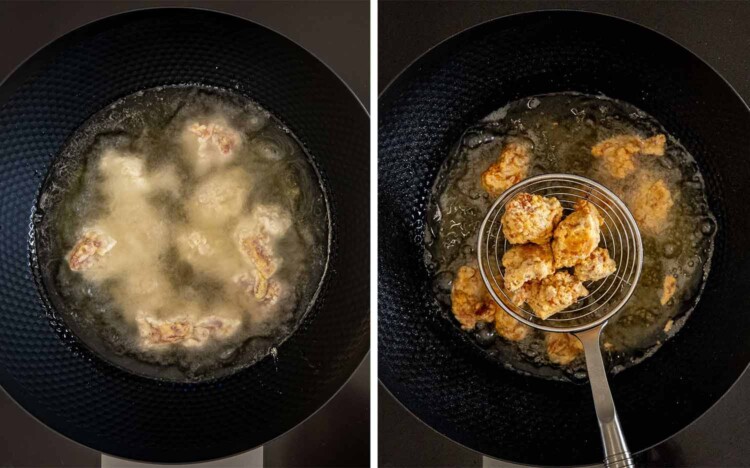
Pour 2 inches of oil into a heavy pot and heat to 350°F. A thermometer is your best friend here. Oil that’s too cool gives you pale greasy chicken. Oil that’s too hot burns the coating before the chicken cooks through.
Fry the chicken in batches, never crowding the pot, for 4 to 5 minutes until golden and cooked through. Lift each batch onto a wire rack over paper towels. Don’t stack them on each other, the steam will make the coating soggy and you’ve worked too hard for that.
Now the second fry. Once all the chicken is fried, raise the oil temperature to 375°F and fry everything again for 1 to 2 minutes. This is the step that takes the crust from very good to genuinely shattering. Don’t skip it.
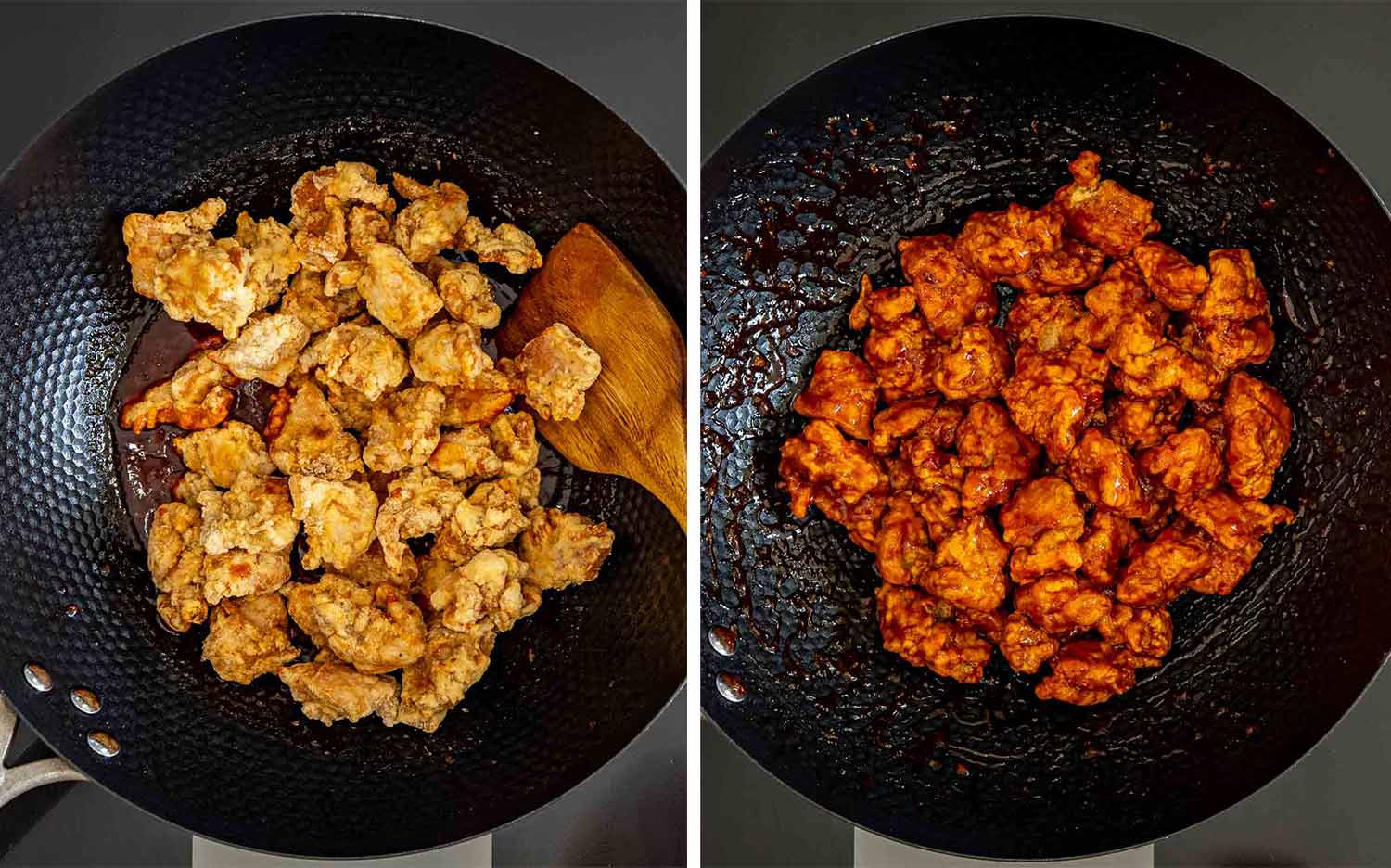
While the chicken drains, make the sauce. Combine all the sauce ingredients in a large skillet over medium heat and simmer for 2 to 3 minutes until glossy and slightly thickened. Add the fried chicken and toss quickly until every piece is coated. Work fast here. The longer the chicken sits in sauce the softer the coating gets and you want to eat this at peak crispiness.
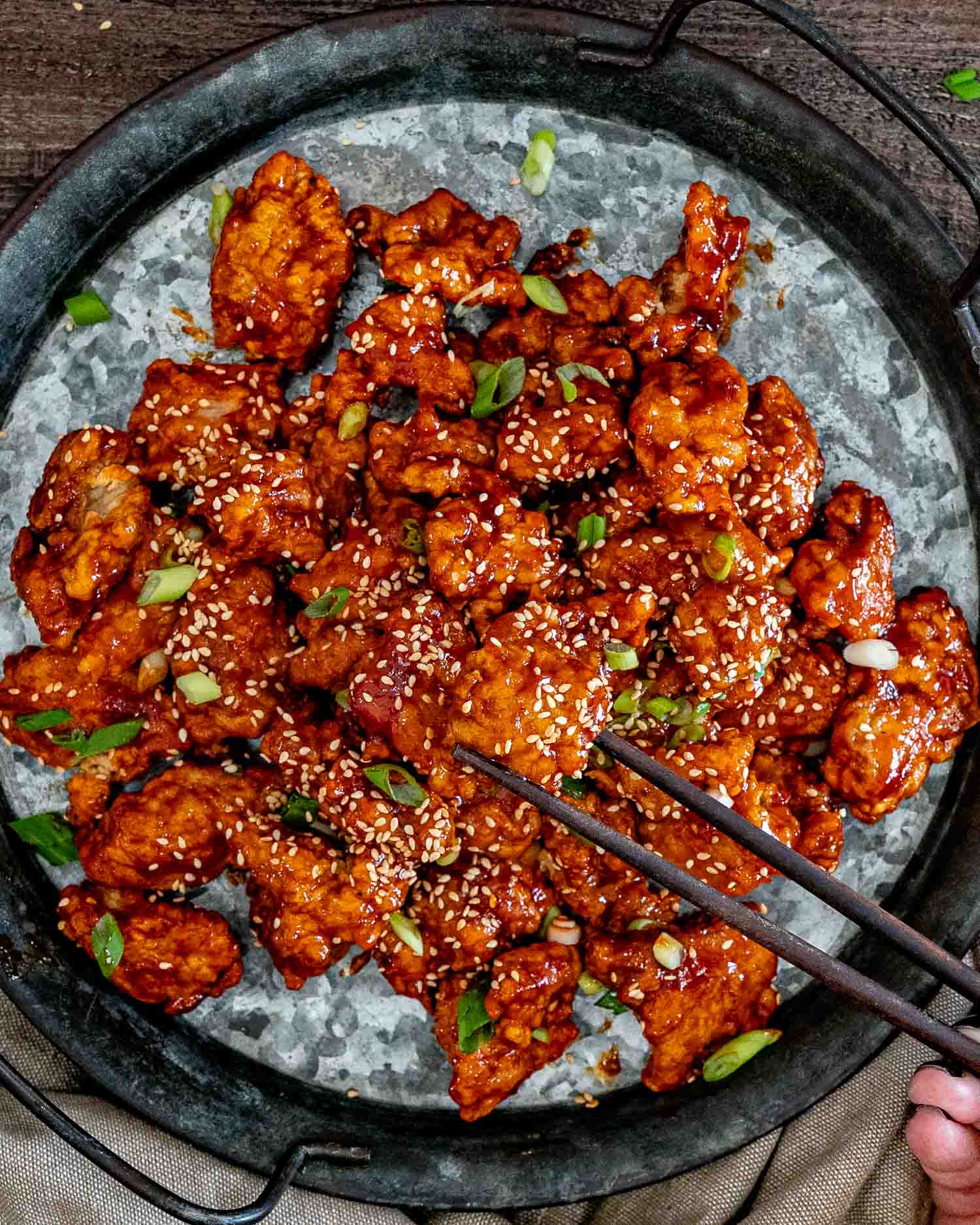
Sprinkle with sesame seeds and green onions and serve immediately.
The Double Fry
This deserves its own section because it’s the technique that separates Korean fried chicken from everything else and it’s the reason this recipe is worth making instead of just ordering takeout.
The first fry at 350°F cooks the chicken through. The second fry at 375°F drives out the remaining moisture in the coating and creates that shattering, glassy crust that stays crispy even under sauce. Without the second fry the coating is good. With it the coating is exceptional.
The key is letting the chicken rest and drain between fries. This rest time allows the interior temperature to equalize and any surface moisture to evaporate before the second fry. Don’t rush straight from the first fry to the second. Give it a minute.
Before You Start
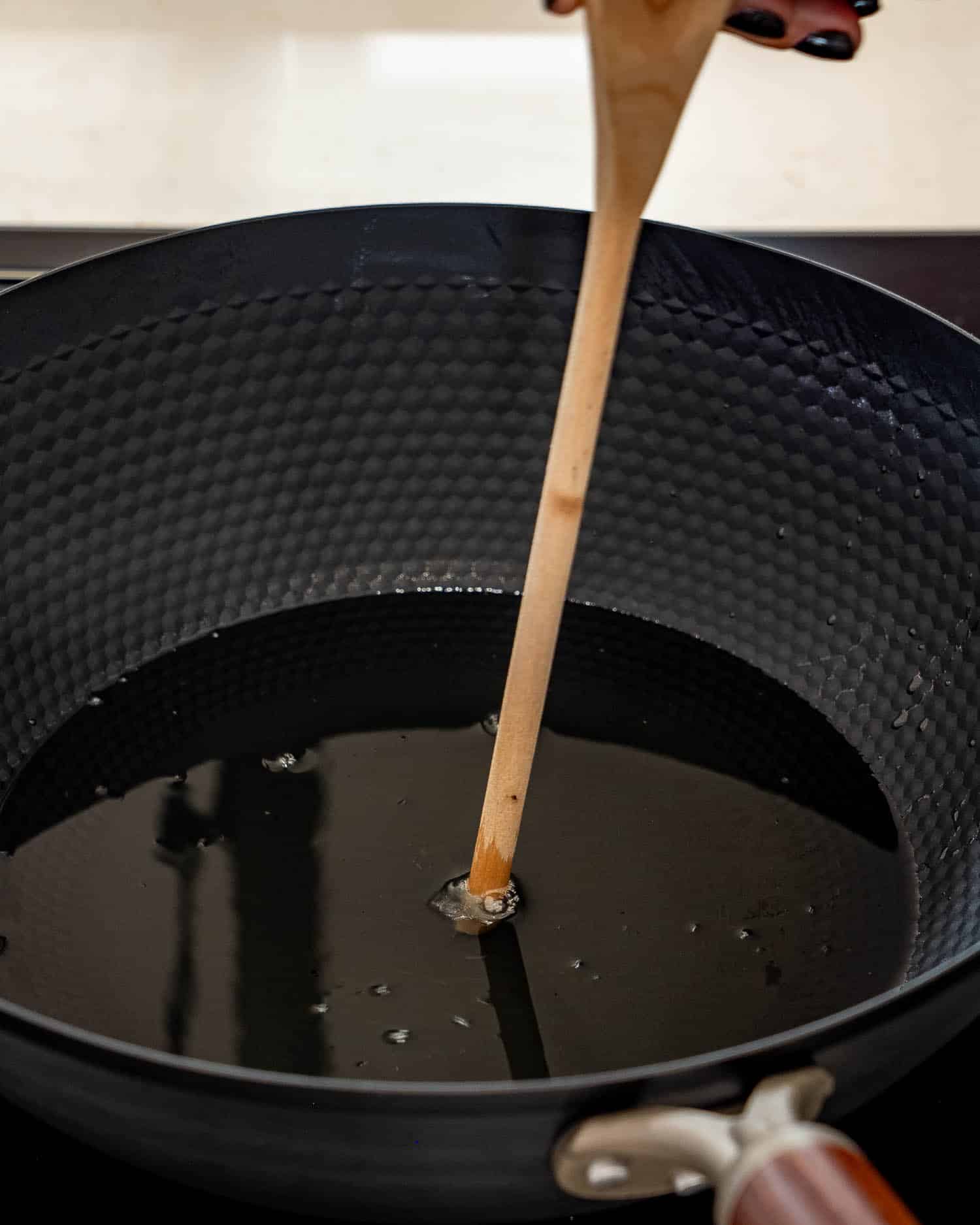
- Use a thermometer. Oil temperature is everything in frying. Too low and the chicken is greasy and pale. Too high and the outside burns before the inside cooks through. 350°F for the first fry, 375°F for the second. If you don’t have a thermometer, stick the handle of a wooden spoon into the oil. If small bubbles form steadily around the handle the oil is ready. If nothing happens it needs more time. If it goes crazy and bubbles violently it’s too hot. A thermometer is still the most reliable option but the wooden spoon trick has been getting home cooks through frying for generations and it works.
- Fry in batches. Crowding the pot drops the oil temperature and you end up with soggy coating instead of crispy coating. Give each piece room.
- Wire rack over paper towels, not just paper towels. The rack keeps the bottom of the chicken elevated so steam can escape. Paper towels alone trap steam and soften the coating.
- Press the coating on. Don’t just toss and hope. Press each piece into the cornstarch and flour mixture so every surface is covered.
- Toss with sauce and serve immediately. This is a right now dish. The coating softens as it sits in the sauce. Get it on the table fast.
Try These Recipes Next
- Korean BBQ Chicken
- Korean Beef Tacos
- Easy Beef and Broccoli
- Korean Style Pork Chops
- Sweet and Sour Sauce
Korean Popcorn Chicken
Ingredients
For the chicken
- 1½ pounds boneless skinless chicken thighs cut into bite size pieces
- 1 teaspoon salt
- ½ teaspoon black pepper
- 1 teaspoon garlic powder
- 1 teaspoon fresh ginger grated
- 1 large egg
- ½ cup cornstarch
- ½ cup all purpose flour
- Vegetable oil for frying
For the sauce
- 3 tablespoons gochujang
- 3 tablespoons honey
- 2 tablespoons soy sauce low sodium
- 2 tablespoons ketchup
- 1 tablespoon rice vinegar
- 1 tablespoon brown sugar
- 3 cloves garlic minced
- 1 teaspoon toasted sesame oil
For serving
- 1 tablespoon sesame seeds
- 2 green onions sliced
Instructions
- In a bowl, toss the 1½ pounds chicken pieces with the 1 teaspoon salt, ½ teaspoon black pepper, 1 teaspoon garlic powder, and 1 teaspoon grated ginger. Add the 1 egg and mix until every piece is coated.
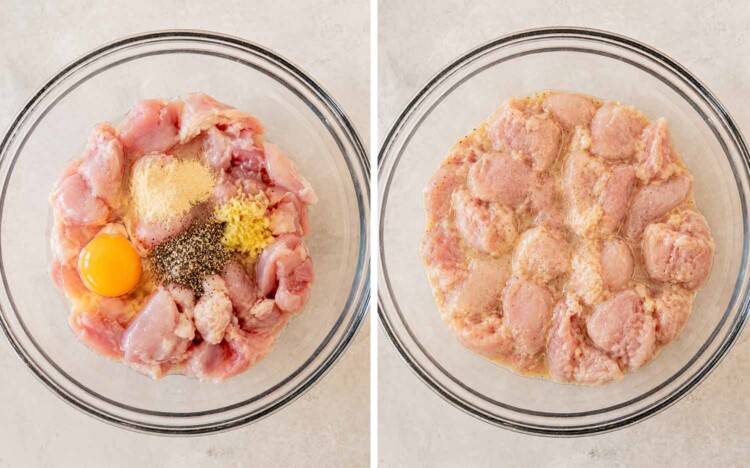
- In a separate shallow dish, whisk together the ½ cup cornstarch and ½ cup flour. Toss the chicken pieces in the mixture until fully coated, pressing so it sticks. The cornstarch is the secret to that shatteringly crisp Korean fried chicken coating, so do not swap it all out for flour.
- Pour 2 inches of vegetable oil into a heavy pot and heat it to 350°F (175°C).
- Working in batches, fry the chicken for 4 to 5 minutes, until golden and cooked through. Lift onto a wire rack set over paper towels. For extra crunch, once all the chicken is fried, raise the oil to 375°F (190°C) and fry the pieces a second time for 1 to 2 minutes. This double fry is the classic Korean technique that makes the crust stay crisp even under the sauce.
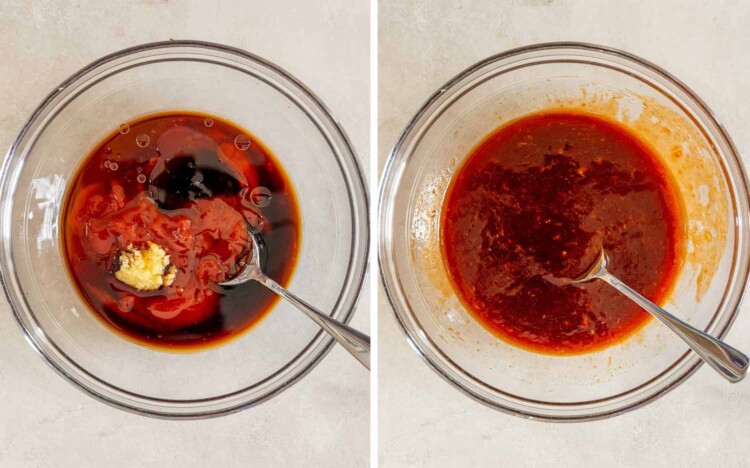
- While the chicken drains, make the sauce. In a large bowl, combine the 3 tablespoons gochujang, 3 tablespoons honey, 2 tablespoons soy sauce, 2 tablespoons ketchup, 1 tablespoon rice vinegar, 1 tablespoon brown sugar, 3 cloves minced garlic, and 1 teaspoon sesame oil. Pour the sauce in a large skillet or wok and simmer over medium heat for 2 to 3 minutes, until glossy and slightly thickened.
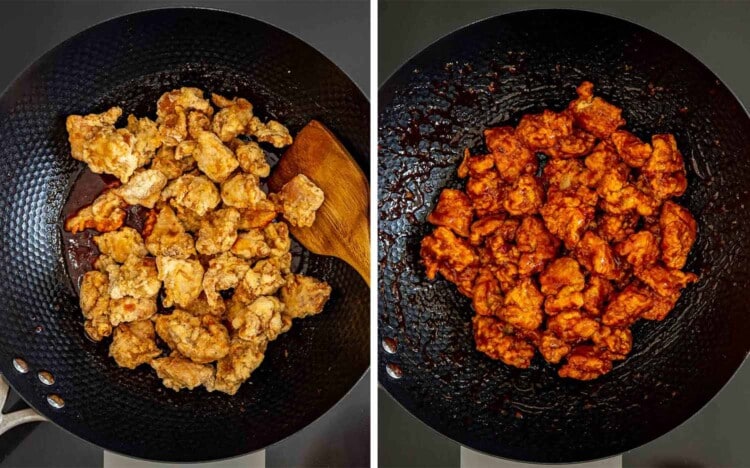
- Add the fried chicken to the skillet and toss quickly until every piece is coated in the sauce. Work fast here, so the coating stays crisp before it soaks up too much sauce.
- Sprinkle with the 1 tablespoon sesame seeds and sliced green onions, and serve right away.
Tips & Notes:
- Cornstarch is non negotiable: The equal mix of cornstarch and flour is what gives you that distinctively crispy Korean fried chicken coating. Don’t swap it all out for flour.
- Use a thermometer: 350°F for the first fry, 375°F for the second. Oil temperature is everything in frying and guessing doesn’t work.
- Fry in batches: Crowding drops the oil temperature and gives you soggy coating instead of crispy coating. Give each piece room.
- Wire rack over paper towels: Keeps the bottom of the chicken elevated so steam can escape. Paper towels alone soften the coating.
- The double fry: First fry at 350°F cooks the chicken through. Second fry at 375°F drives out moisture and makes the coating shattering crispy. Don’t skip it if you can help it.
- Let it rest between fries: Give the chicken a minute on the rack between the first and second fry. This allows any surface moisture to evaporate before the second fry.
- Toss with sauce and serve immediately: The coating softens as it sits in the sauce. Get it on the table fast.
- Chicken thighs over breasts: Juicier, more flavorful, and more forgiving through a double fry. Breasts dry out more easily.
- Gochujang heat level: 3 tablespoons gives pleasant warmth. Reduce to 2 for milder, add more or a splash of sriracha for hotter.
- Air fryer option: Toss coated chicken with 2 tablespoons of oil, air fry at 400°F for 12 to 15 minutes shaking halfway. Good but not quite the same crust as deep frying.
- Make ahead: The sauce keeps in the fridge for up to 3 days. Fry the chicken fresh when ready to serve.
nutrition facts
Frequently Asked Questions
Can I use chicken breasts instead of thighs?
I’d stick with thighs if you can. They stay juicier through the double fry and have more flavor. Breasts work but they dry out more easily at frying temperatures and the window between cooked and overdone is smaller.
Can I skip the double fry?
Technically yes but the result won’t be the same. The single fry gives you crispy chicken. The double fry gives you shatteringly crispy chicken that stays crispy under sauce. If you’re short on time, single fry is still delicious. But if you can manage the extra 2 minutes, do it.
How spicy is the sauce?
With 3 tablespoons of gochujang it’s pleasantly spicy with a good amount of warmth but not overwhelming. Reduce to 2 tablespoons if you prefer milder and add more honey to compensate. If you like it hotter, add another tablespoon or a splash of sriracha.
Can I air fry this instead of deep frying?
Yes. Toss the coated chicken with 2 tablespoons of oil, air fry at 400°F for 12 to 15 minutes shaking halfway through. You won’t get quite the same shattering crust as deep frying but it’s still very good. Skip the double fry and just do one pass.
Can I make this ahead?
The sauce can be made up to 3 days ahead and refrigerated. Fry the chicken fresh when you’re ready to serve. Fried chicken does not reheat well and the coating softens as it sits so this is a make it fresh and eat it immediately situation.
What can I serve with this?
Steamed rice is the obvious and correct answer. It soaks up any extra sauce and balances the heat. A simple cucumber salad alongside is also very good and cuts through the richness of the frying.